
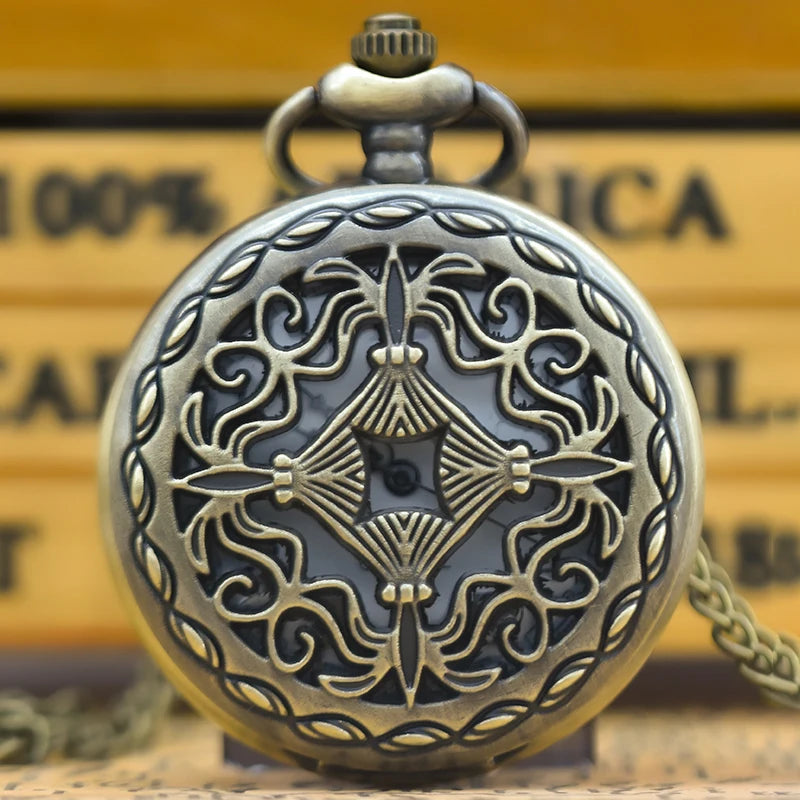
The short answer: a mechanical pocket watch runs on a coiled mainspring that you wind by hand, while a quartz pocket watch runs on a battery that drives a vibrating quartz crystal. Quartz is more accurate, cheaper to own and almost maintenance-free. Mechanical is the traditional choice, with a ticking balance wheel, a daily winding ritual and a movement that can last for generations if it is cared for. This guide covers how each movement works, how they compare, how to wind and set a mechanical pocket watch without damaging it, and how to look after either type.
How a Mechanical Pocket Watch Works
A hand wind pocket watch stores energy in a mainspring, a long ribbon of metal coiled inside a barrel. Turning the crown tightens that spring. As it slowly unwinds, it pushes energy through a chain of gears called the gear train. The escapement, a small lever and toothed wheel, releases that energy in tiny, regular steps, and the balance wheel swings back and forth at a steady rate to keep those steps even. That back-and-forth is what produces the familiar tick.
Everything happens without electronics. That is why mechanical watches are appreciated by collectors and by anyone who likes to see how things work. Skeleton designs are built around this idea: an open dial or a transparent case back reveals the gears, and on a mechanical movement you can watch the balance wheel swing. Browse our skeleton pocket watch designs and check each product description to see which movement sits inside.
How a Quartz Pocket Watch Works
A quartz pocket watch uses a small battery to send current through a tiny piece of quartz crystal. The crystal vibrates at a very stable frequency, a circuit counts those vibrations and sends a pulse to a stepper motor once per second, and the motor advances the hands. Because the crystal is so stable, quartz watches keep time far more precisely than most mechanical movements. The second hand typically moves in distinct one-second jumps rather than the smoother sweep of a mechanical watch.
Quartz does not need winding. You simply set the time and replace the battery when it runs down. Many antique-style pocket watches use quartz movements inside ornate bronze, brass or filigree cases, so you can get the vintage look without the daily routine.
Mechanical vs Quartz Pocket Watch: Side-by-Side Comparison
| Feature | Mechanical (hand wind) | Quartz |
|---|---|---|
| Power source | Mainspring wound by hand | Battery |
| Accuracy | Varies with quality and adjustment; may gain or lose several seconds a day | Very accurate; drift is usually measured in seconds per month |
| Daily routine | Needs regular winding | None beyond occasional time setting |
| Maintenance | Periodic cleaning and oiling by a watchmaker | Battery changes; little else |
| Second hand | Smoother, faster ticking motion | One step per second |
| Sensitivity | More sensitive to shocks, magnetism and overwinding mistakes | More tolerant of everyday handling |
| Appeal | Craftsmanship, tradition, visible movement | Convenience, reliability, low running cost |
Accuracy
If precision is your top priority, quartz wins. A mechanical movement’s rate shifts slightly with temperature, position and how much tension is left in the mainspring. That is normal and not a defect. Most owners of mechanical pocket watches simply check the time against a reliable reference every day or two and nudge the hands when needed.
Maintenance and Running Costs
A quartz watch mostly asks for a fresh battery now and then. A mechanical watch has dozens of moving parts lubricated with very small amounts of oil, and that oil breaks down over time. A watchmaker will usually recommend a full service every few years, depending on how often the watch is worn. Servicing costs more than a battery, but a well-maintained mechanical movement can keep running for decades.
Price and Value
Quartz movements are inexpensive to produce, which is why they are common in decorative and gift pocket watches. Mechanical movements involve more parts and more assembly, so they generally sit higher in price. For something special, our luxury pocket watches are a good place to compare finishes and details.
Which One Should You Choose?
- Choose mechanical if you enjoy a daily ritual, want to hear the tick of a balance wheel, or are drawn to the history of traditional watchmaking.
- Choose quartz if you want an antique look with grab-and-go reliability, or if the watch will mostly be worn as a pendant or occasional accessory.
- For a gift, think about the recipient. A collector or a hobbyist usually appreciates mechanical; someone who just wants a handsome watch that works will often prefer quartz.
How to Wind a Pocket Watch Correctly
Winding is simple once you know the feel of your watch. These steps apply to most hand wind pocket watches with a crown at the top.
- Take the watch in your hand. Hold it securely, dial facing you, so you are not putting sideways pressure on the stem. Avoid winding while the watch is still clipped to your waistcoat or chain under tension.
- Use the crown in its normal position. On most pocket watches the crown winds when it is pushed fully in. Some older designs use a separate key; if yours has a keyhole on the dial or case back, use a key of the correct size.
- Turn clockwise with steady, even motions. Use your thumb and index finger to rotate the crown forward. You may hear a soft clicking, which is normal. Turning backward is usually harmless on modern movements but does not wind the spring.
- Stop as soon as you feel resistance. When the mainspring is fully wound, the crown will become noticeably harder to turn. Stop there. Never force it past that point.
- Wind at the same time each day. Winding once a day, for example every morning, keeps the spring tension more consistent and helps the watch keep steadier time.
How to Set the Time
On a pendant-set watch, pull the crown out gently to its setting position and turn it to move the hands, then push it back in. On a lever-set watch, common on railroad-style models, you open the crystal or bezel, pull out a small lever near the edge of the dial, set the hands with the crown, then push the lever back and close the watch. If you are unsure which type you have, look for a tiny lever at the edge of the dial before pulling hard on the crown.
Common Winding Mistakes That Damage the Mainspring
- Forcing the crown after it stops. This is the classic overwinding mistake. The spring is already full, and extra force can strain or break it, or damage the winding gears.
- Winding fast and jerky. Quick, rough twists put sudden stress on the stem and crown wheel. Slow, even turns are kinder to the parts.
- Pulling the crown out at an angle. Tugging sideways can bend or snap the winding stem.
- Assuming a stopped watch is overwound. If a watch will not run even though the crown feels tight, the cause is often old, thickened oil or a mechanical fault, not too much winding. Have it checked by a watchmaker rather than forcing it.
- Letting it sit unwound for years. A mechanical watch that is never run can have its lubricants stiffen. Running it from time to time helps keep it healthy.
Pocket Watch Care: Storage and Cleaning
Daily Handling
Pocket watches are more exposed to knocks than wristwatches because they are taken in and out of pockets. Attaching the watch to a chain or fob helps prevent drops. Keep it away from strong magnets, such as speakers, magnetic phone cases and bag clasps, which can affect the hairspring of a mechanical movement. Avoid water unless the watch is clearly specified as water resistant; most antique-style pocket watches are not.
Storage
When the watch is not being worn, store it in a dry place away from direct sunlight and big temperature swings. A soft pouch or a dedicated pocket watch case keeps the crystal from being scratched and stops metal cases from rubbing against keys or jewelry. For long-term storage of a quartz watch, removing the battery prevents the risk of leakage inside the movement.
Cleaning the Case
- Wipe the case and crystal with a soft, dry microfiber cloth after wearing to remove skin oils and dust.
- For engraved or filigree cases, a soft-bristled brush lifts dust from the recesses without scratching.
- Avoid harsh chemical cleaners, ultrasonic cleaners and soaking. Moisture and solvents can get into the movement.
- Bronze and brass naturally develop a patina over time. Many people like that aged look; if you prefer it brighter, use a cleaner made for that specific metal on the outside of the case only, and keep it well away from the crown and crystal edges.
Professional Servicing
Leave the inside of the watch to a professional. Opening the movement, cleaning and oiling it requires specialized tools. Signs that a mechanical watch needs attention include a sudden change in timekeeping, a crown that feels gritty, or a watch that stops well before its usual running time.
Finding Your Pocket Watch
If the craft of a hand-wound movement appeals to you, browse our mechanical pocket watches. If you would rather have the vintage look with quartz convenience, the full pocket watch collection brings every style and finish together in one place.
Frequently Asked Questions
Is a mechanical or quartz pocket watch better?
Neither is better in every way. Quartz is more accurate and needs less maintenance. Mechanical offers traditional craftsmanship and a movement you can see and hear working, but it needs regular winding and periodic servicing.
How often should I wind a mechanical pocket watch?
Once a day is the usual routine, ideally at the same time each day. Wind until you feel firm resistance, then stop. Most hand wind movements will run for about a day or a little longer on a full wind, so daily winding keeps them going without interruption.
Can you overwind a pocket watch?
When a mainspring is full, the crown stops turning freely. The damage comes from forcing it beyond that point. If you stop at the first firm resistance, normal winding will not harm the watch.
How can I tell if my pocket watch is mechanical or quartz?
Watch the second hand. A one-second jumping motion usually indicates quartz, while a faster, smoother ticking motion suggests a mechanical movement. Mechanical watches also tick audibly when held near the ear, and a transparent case back or skeleton dial will show gears and a swinging balance wheel.
Do quartz pocket watches need any care?
Yes, but very little. Replace the battery when the watch stops or the second hand starts skipping, keep it dry, and wipe the case regularly. Remove the battery if you plan to store the watch for a long period.