
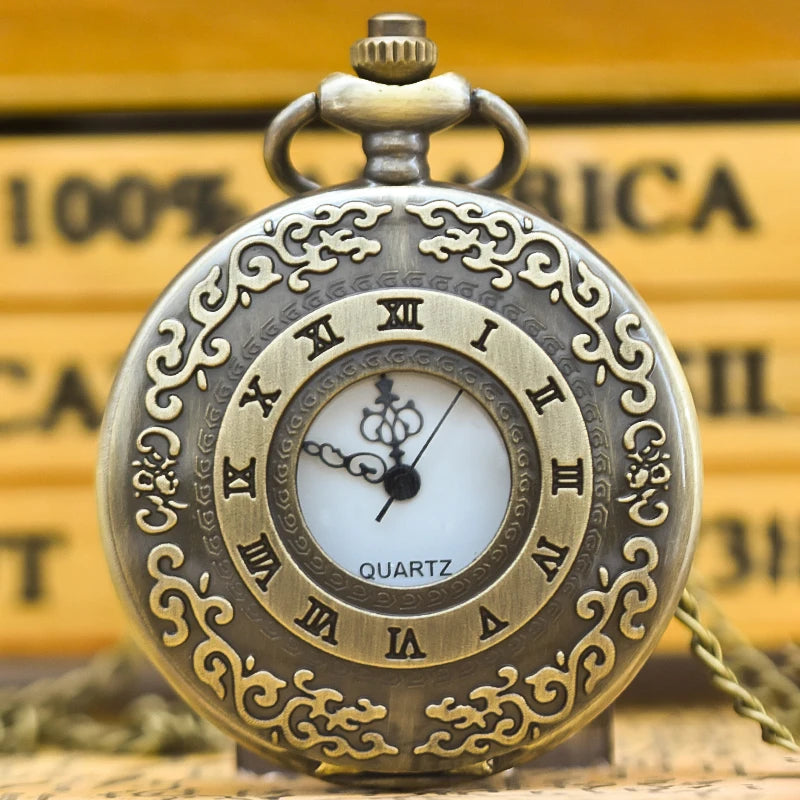
The short answer: a full hunter pocket watch has a solid hinged lid that closes over the crystal, an open face pocket watch has no front cover at all, a half hunter sits in between with a small window in the lid, and a skeleton pocket watch is defined less by its case than by its cut-away design that lets you see inside. If you want protection and a little ceremony, choose a full hunter. If you want to read the time at a glance, choose an open face. If you love mechanics and visual detail, choose a skeleton. The rest of this guide explains why, so you can pick the style that fits the way you will actually use it.
Why the Case Style Matters More Than You Think
The case style shapes daily use more than the material or the dial: how quickly you can check the time, how well the crystal survives a pocket full of keys, where the crown sits and how thick the watch feels. Here is how the four main types of pocket watches compare.
| Style | Front cover | Reading the time | Crystal protection | Best for |
|---|---|---|---|---|
| Full hunter | Solid hinged lid | Open the lid first | Highest | Gifting, engraving, formal wear |
| Half hunter | Lid with a small central window | Through the window, lid closed | High | Collectors who want both |
| Open face | None | Instant | Lowest | Daily wear, practical use |
| Skeleton | Varies (open or cut-out lid) | Depends on the design | Varies | Showpieces, mechanical fans |
The Full Hunter Pocket Watch
A full hunter pocket watch has a solid metal lid hinged over the dial. Press the crown or a small pusher and the cover springs open; close it and the crystal is completely sealed away. The name is traditionally linked to riders who needed a watch that could survive a fall or a stray branch while out hunting on horseback. Whatever the exact origin, the logic is clear: the lid is armor for the most fragile part of the watch.
Strengths
- Protection. The crystal and hands are shielded from scratches, knocks and dust.
- A canvas for decoration. The outer lid is a large, flat surface, ideal for engraving, monograms, relief work or embossed scenes. This is why so many decorative and gift watches use a hunter case.
- A sense of occasion. Opening the lid is a small ritual that makes the watch feel like a keepsake.
Trade-offs
- You need a free hand and a second to open the cover before you can read the time.
- The hinge and the closing spring are extra moving parts that should be treated gently.
- The case is slightly thicker than an equivalent open face design.
If you are shopping for a present, a full hunter is usually the safest choice: the lid can carry a meaningful design, and the recipient gets a watch that feels special every time it opens. You can browse our full hunter pocket watches to see how varied the lid designs can be, from engraved Roman numerals to animal reliefs and landmark scenes.
The Half Hunter Pocket Watch
The half hunter, sometimes called a demi-hunter, is a clever compromise. It keeps the protective lid but adds a small glazed window in the center. Around that window, the hour markers are usually printed or enameled on the outside of the lid, so you can read the position of the hands through the opening without opening the cover.
You get a quick reading with the lid closed and the dial stays well protected. On the other hand, the window shows only the hands, so precise reading still means opening the cover, and half hunters are less common, which narrows the choice of designs. Choose a half hunter if you like the protection of a lid but find yourself annoyed at opening it every time you want to know the hour.
The Open Face Pocket Watch
An open face pocket watch has no front cover. The crystal sits directly in the bezel, just as on a wristwatch, and the dial is always on display. It is the most direct, functional design of the group, and historically it became the preferred choice wherever reading the time quickly really mattered.
The best-known example is the railroad watch. In the late nineteenth century, American railroads adopted strict standards for the watches their crews carried, and those standards favored open face cases with the crown at 12 o’clock, clear dials and bold numerals. The reasoning was simple: a conductor should never have to fumble with a lid to confirm the time. Railroad-style watches still carry that purely practical look today.
Strengths
- Instant readability. Pull it out, glance, put it back.
- Slimmer profile. Without a lid and hinge, the case is usually thinner and sits more comfortably in a waistcoat or jeans watch pocket.
- Clean, timeless look that suits both formal and casual outfits.
Trade-offs
- The crystal is exposed, so it is more vulnerable to scratches. Keep it in its own pocket, away from keys and coins.
- There is less surface for engraving on the front; personalization usually goes on the case back instead.
If the watch is meant to be worn and used rather than kept in a drawer, an open face model is often the most comfortable companion. Explore our open face pocket watches if everyday readability is your priority.
The Skeleton Pocket Watch
Strictly speaking, skeleton is not a case style in the same sense as hunter or open face. In traditional watchmaking, a skeleton watch is one where the dial and parts of the movement have been cut away so you can see the gears, springs and balance wheel at work. A skeleton movement can be housed in an open face case, behind a glass case back, or under a lid.
In the wider world of decorative pocket watches, the term is also used for openwork designs: lids pierced with filigree, floral patterns, butterflies, owls or zodiac motifs that let you glimpse the dial underneath without opening the cover. Both interpretations share the same idea of revealing what is usually hidden.
Strengths
- Visual interest. Moving parts or cut-out patterns catch the light in a way a solid lid cannot.
- Appeal for mechanical enthusiasts, who enjoy watching a balance wheel at work.
- A blend of protection and visibility when the openwork is on a lid.
Trade-offs
- A busy, see-through dial is slightly harder to read at a glance than a plain one.
- Openings in a cover let in more dust than a solid lid.
Take a look at our skeleton pocket watches to compare cut-out lids and exposed movements side by side. If you specifically want to see a real hand-wound mechanism ticking, filter toward mechanical pocket watches, since the visual effect is at its best with a movement that actually has a balance wheel to show.
Crown Position: The Detail Most Buyers Miss
On antique watches, the position of the winding crown is closely tied to the case style. Classic hunter case movements were typically laid out with the crown at 3 o’clock and the small seconds dial at 6, so the hinge of the lid sits at 9 and the watch opens naturally when held in the left hand. Open face movements usually place the crown at 12 with the seconds at 6, which is why so many open face watches feel balanced when you hang them from a chain.
Collectors sometimes spot an open face watch with its crown at 3 o’clock, often called a sidewinder, a sign the movement was originally made for a hunter case. On most modern decorative models, the crown sits at 12 regardless of the case and doubles as the lid release.
Which Style Should You Choose?
For daily wear
Go for an open face. It is quicker to read, slimmer in the pocket and the least fussy to live with. If you are worried about the crystal, a half hunter is a sensible middle ground.
For a gift
A full hunter is hard to beat: the lid can carry an engraving or a scene that means something to the recipient. A pocket watch with a decorative lid, such as an engraved bronze case with Roman numerals, works well for birthdays, anniversaries, graduations and groomsmen.
For collecting
Collectors usually end up with at least one of each. Half hunters are prized for their relative rarity, skeleton designs for their craftsmanship, and well-preserved full hunters for the condition of their lids. Browsing a range of vintage pocket watches is a good way to train your eye before you narrow your focus.
For a statement piece
Pick a skeleton. Whether it shows a mechanical heart or an intricate openwork cover, it is the style most likely to start a conversation.
Still undecided? The easiest next step is to compare the styles side by side in our full range of all pocket watches, where hunter, open face and skeleton designs sit next to each other.
Frequently Asked Questions
What is the difference between a full hunter and an open face pocket watch?
A full hunter has a solid hinged lid that covers the crystal and must be opened to read the time. An open face has no front cover, so the dial is always visible. The hunter offers more protection and room for decoration; the open face is quicker to read and usually slimmer.
Is a half hunter the same as a skeleton pocket watch?
No. A half hunter has a lid with a single small window, often surrounded by hour markers, so you can read the hands with the cover closed. A skeleton watch shows the movement or uses a pierced, decorative openwork design. Some skeleton watches have a lid, but the openings are part of the decoration rather than a reading window.
Why is the crown at 3 o’clock on some pocket watches?
Traditional hunter case movements placed the crown at 3 o’clock so the lid hinge could sit at 9. When such a movement ends up in an open face case, the crown stays at 3, which collectors call a sidewinder. Most open face watches place the crown at 12.
Which pocket watch style is best for everyday use?
An open face pocket watch is generally the most practical for everyday use because you can read it instantly. If you carry other items in the same pocket, a full or half hunter will better protect the crystal.
Are skeleton pocket watches always mechanical?
Not always. A true skeleton movement is mechanical, since the point is to show the gears and balance wheel. However, many decorative pocket watches use the word skeleton for a cut-out or filigree lid over a quartz movement. Check the product description to see which type of movement is inside.